
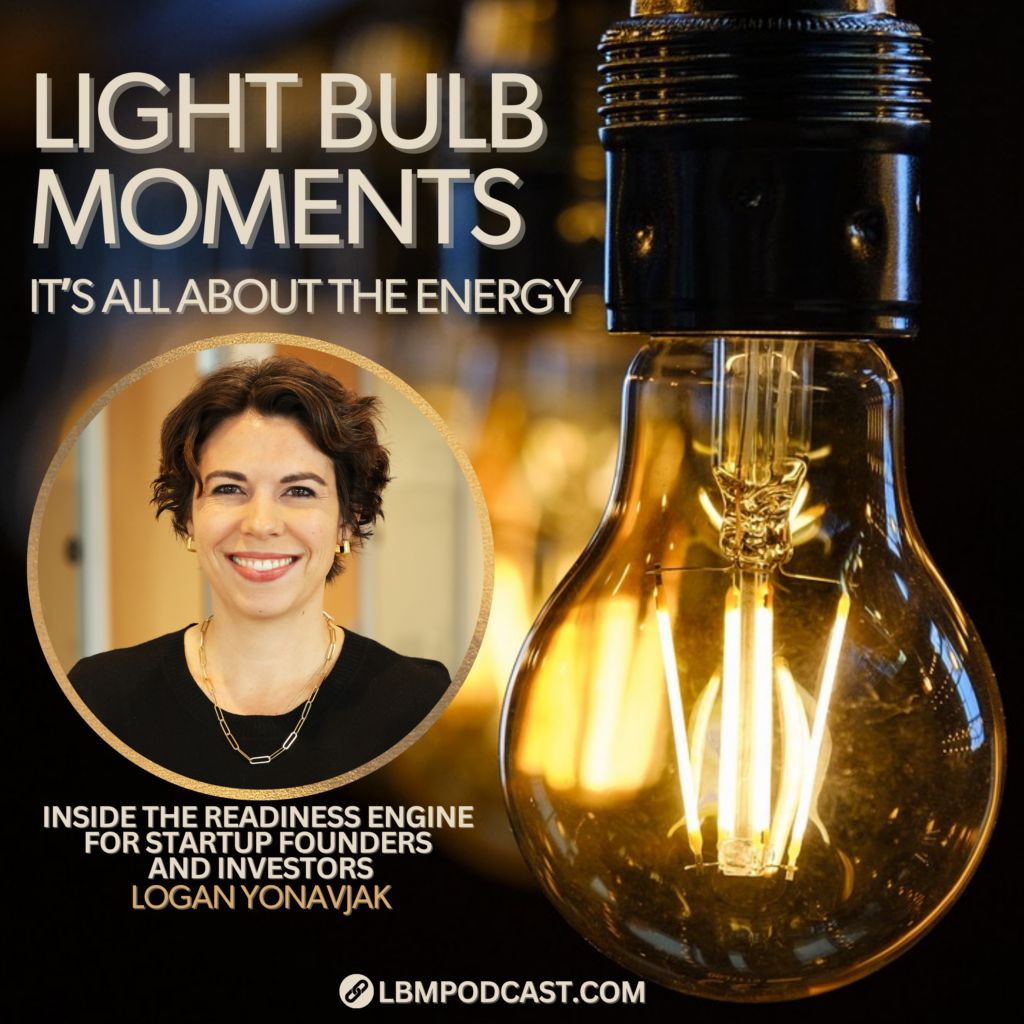
What if your podcast interviews, pitch calls, and founder meetings could be analyzed to reveal how you really lead under pressure? In this episode, we dive into an AI-powered platform that reads between the lines of transcripts to uncover leadership readiness, founder resilience, and the hidden patterns that drive startup success.
Why This Episode Matters
This episode is for founders, investors, entrepreneurs, and leaders trying to understand whether they and their teams are truly ready to build and grow. It challenges us to look beyond titles, instincts, and traditional assessments and ask deeper questions about how people naturally operate. But the lesson extends well beyond startups: understand your strengths, challenge your ego, use data to test your instincts, protect human connection in an increasingly automated world, and remember that everyone sees patterns through a different lens. The more you understand your own patterns-and recognize that others may see something entirely different-the better equipped you become to lead, invest, communicate, and make decisions.
In this Episode, Philip and Logan Yonavjak Discuss:
- AI-powered leadership and developmental assessment
- The Readiness Engine platform and transcript analysis
- Founder readiness, investor decision-making, and people analytics
- Patterns, complexity, and stages of leadership development
- Ag tech, soil health, and the future of sustainable investing
Conversation Takeaways
- Leadership can be evaluated not just through self-reported tests, but by analyzing how people naturally speak, tell stories, and respond under pressure.
- Transcript-based assessment offers a way to reduce bias and move beyond gut feeling alone when investors evaluate early-stage founders.
- A clear developmental roadmap is more valuable than a static assessment result; knowing how to grow is as critical as knowing where you are.
- Resistance to being evaluated often reveals attachment to ego and a lower tolerance for feedback, which can limit growth and adaptability.
- Thoughtful use of AI – with clear guardrails, skills, and prompts – can dramatically enhance strategy, reflection, and decision-making, but it should complement, not replace, human connection.
“Once you see how the system is operating and at what level it’s operating, you can then see how to program it to function at a higher level of operation” – Logan Yonavjak
Logan Yonavjak is Co-Founder & CEO of the Readiness Engine, a leadership intelligence company measuring the hidden drivers of execution risk inside growing organizations. She has helped move hundreds of millions of institutional capital across climate and natural capital strategies and now focuses on building the Readiness Engine™ – a platform that transforms leadership potential from subjective judgment into measurable, predictive insight. Logan speaks and writes at the intersection of capital, leadership, and long-term value creation.
Light Bulb Moments – Episode 224
Inside the Readiness Engine for Startup Founders and Investors with Logan Yonavjak
The Light Bulb Moment of This Episode
We don’t all see the same patterns because we don’t all have the same experiences, knowledge, or understanding of the world. The patterns you recognize are shaped by how large your own universe of experience has become. That’s important for founders, investors, leaders, and relationships because what seems obvious to you may be completely invisible to someone else. Understanding how you naturally operate-and how others operate differently-can help you put the right people in the right roles, make better decisions, and recognize when your own instincts need to be challenged. Readiness isn’t about having all the answers. It’s about understanding yourself, your team, and the patterns influencing the decisions you make.
Light Bulb Moments & Reflections from the Episode
1. Determine who you are based on how you naturally operate.
Traditional assessments can tempt us to answer based on who we think we should be. Understanding how you behave in your natural state may reveal far more about how you’ll actually perform when building, leading, and making decisions.
2. At the seed stage, the team is critical.
An early-stage company isn’t just an idea-it’s the people expected to turn that idea into something real. Understanding each person’s strengths, weaknesses, and natural operating style can help determine whether the team is actually ready to execute.
3. The visionary isn’t necessarily the right person for every job.
Being the founder doesn’t automatically mean you should handle every function of the company. Identify what you’re great at, understand where you belong, and delegate responsibilities that someone else is naturally better equipped to handle.
4. Don’t rely on your gut alone.
Instinct can be valuable, but data can provide checks and balances. Compare what your gut is telling you with what the information says, look for patterns over time, and make a more educated, percentage-based decision.
5. Sometimes your gut may actually be wrong.
If your instincts consistently conflict with the data, don’t automatically assume the data is the problem. Pay attention to the pattern. Learning when not to trust your instincts can be just as valuable as developing good instincts.
6. Forget your ego and stretch.
“I can’t change” can become an excuse for staying comfortable. Sometimes growth requires admitting you’re wrong, moving beyond the way you’ve always operated, and allowing yourself to learn something new.
7. Don’t turn soil into dirt.
Enrich the environments you’re part of rather than depleting them. Create a free flow of ideas, surround yourself with the right people, and make your interactions leave something more valuable behind.
8. Are you really a CEO-or are you a COO?
Titles shouldn’t simply describe hierarchy; they should reflect how someone naturally contributes. Understand what the CEO, COO, CFO, and other roles actually require, then determine where your abilities fit instead of forcing yourself into a role because of your title.
9. Do what you’re best at and delegate the rest.
Readiness includes recognizing what you shouldn’t be doing. The right person in the wrong role can limit an organization just as much as having the wrong person altogether.
10. AI is only as useful as your ability to direct it.
If you don’t understand what you’re asking, AI can easily take you somewhere you didn’t intend to go. Learn to prompt intentionally, stay focused on the outcome, and keep yourself in control of the process.
11. Make space for human connection.
Technology, social media, and AI can consume our attention if we allow them to. Intentionally create genuine human interaction every day rather than allowing technology to become your primary connection to other people.
12. A thoughtful human message can cut through a world of bots.
A kind, personalized email can accomplish what twenty automated messages cannot. When everyone else is using technology to scale outreach, genuine effort and humanity can become the differentiator.
13. Don’t automate the humanity out of relationships.
Efficiency isn’t always the goal. When you’re trying to build trust, start a relationship, get a meeting, or create an opportunity, showing another person that you actually care enough to make the effort matters.
14. The patterns you see depend on the size of your universe.
Our ability to recognize patterns is influenced by what we’ve experienced, learned, and encountered. Someone with a different universe of experience may look at exactly the same information and see something entirely different.
15. Don’t assume other people see what you see.
Something that feels obvious to you may not be obvious to someone else. Better leadership and communication begin when we stop assuming everyone is operating from the same set of patterns.
16. Your light bulb moment may be different from mine.
Two people can hear the exact same conversation and walk away with completely different insights. That’s not necessarily disagreement-it’s evidence that our experiences influence what we notice, connect, and absorb.
Connect with Logan Yonavjak:
Website: www.readinessengine.io
LinkedIn: https://www.linkedin.com/in/loganyonavjak/
Connect with Philip:
Website: https://www.fornarolaw.com/
Podcast Website: https://lbmpodcast.com/
Pinterest: https://www.pinterest.com/philipfornaro/
YouTube: https://www.youtube.com/@fornarolaw3002
LinkedIn: https://www.linkedin.com/in/fornarolaw
Instagram: https://www.instagram.com/fornarolaw/
Facebook: https://www.facebook.com/FornaroLaw
https://www.facebook.com/philip.fornaro.3
Podcast Production by Turnkey Podcast. Thinking of starting a podcast? Get more info at https://turnkeypodcast.com/ or reach out to Doug Sandler directly at Doug@TurnkeyPodcast.com or call 410-340-6861.
You’re the expert. Your podcast will prove it.